IMPACT BY DESIGN
INITIATIVE
The Impact by Design Initiative is a cross-sector collaboration that supports schools, educators, and young people in creating real, deployable solutions for real community needs. Rooted in the belief that students should be empowered to design with empathy and build with purpose, the initiative provides a two-phase pathway — from open ideation and simple prototyping to full engineering, fabrication, and public deployment. As we prepare for the 2026 cycle, this platform introduces the mission, structure, and opportunities available to schools who want learning to translate into meaningful community impact.
2026 EDITION / 001
CULTURE
「鳥見」こそは紳士淑女のホビーである。
Impact by Design Initiative
Build what matters.
Young people are bursting with ideas. Communities have authentic needs. The Impact by Design Initiative exists to bring both together — through a structured, supported, and meaningful innovation journey where students design real solutions for real people.
Unlike typical competitions, which stop at polished slides or demos, Impact by Design pushes students further: toward empathy, usefulness, durability, and actual deployment. This is where education, engineering, and social purpose meet.
Impact by Design
Build what matters
What We Do
Young people are bursting with ideas. Communities have authentic needs.
The Impact by Design Initiative exists to bring both together — through a structured, supported, and meaningful innovation journey where students design real solutions for real people.
Unlike typical competitions, which stop at polished slides or demos, Impact by Design pushes students further: toward empathy, usefulness, durability, and actual deployment. This is where education, engineering, and social purpose meet.
TWO PHASES, ONE JOURNEY
The programme is designed as a two-phase pathway that meets schools where they are. Teams may join Phase 1 on its own, or progress through Phase 2 to bring their ideas to full deployment.
Phase 1 focuses on curiosity, empathy, and clear thinking. Students express ideas through simple prototypes — using any platform, from cardboard to Scratch to Stick'em mechanical models. No special equipment is required. All participating teams will have the opportunity to visit and interact with the CPAS community to understand their needs firsthand.
Phase 2 supports teams in transitioning early concepts into durable, public-ready builds. With support from maker educators and fabrication partners, students refine, test, and strengthen their designs to be safe, reliable, and functional in real community settings.
Flexible scheduling: Schools choose their own working timeline within each phase window. Whether your team meets weekly during CCA, runs an intensive holiday sprint, or spreads sessions across the term — you decide what fits your school calendar.
PHASE 1: IDEATION & PROTOTYPING
January – May 2026
Phase 1 lowers the barrier to innovation. Students explore lived experiences, community observations, and partner briefs — including a visit to the CPAS community to understand their needs directly. They learn to identify opportunities and express ideas through quick, accessible prototypes.
Prototyping can be done with any medium — paper models, cardboard rigs, digital mockups, Scratch, MakeCode, Micro:bit, or simple mechanical builds. Younger students receive additional support through our Stick'em partnership.
Phase 1 concludes with a judging round that evaluates clarity, potential impact, and community understanding.
Phase 1 (DIY) — FREE
- Register and receive the challenge brief
- Access online resources and community Q&A sessions
- Submit your work for judging and selection
Phase 1 Plus — Build Your Own Package
- Coaching Sessions$150/hr
- Teacher Workshop$300/session
- Materials Kit$800
PHASE 2: BUILDING & DEPLOYMENT
June – August 2026
Phase 2 transforms promising ideas into real, usable systems. Teams work closely with engineers and fabrication partners to transition their prototypes into dependable solutions.
Students port their ideas to robust platforms such as Arduino and experiment with materials, mechanisms, and structures that will stand up to real-world use. They learn about iteration, testing, safety, and durability.
The phase ends with a public showcase at the Impact by Design Festival, where final builds must operate continuously for real users — a true measure of relevance and practicality.
Phase 2 (DIY) — FREE
- Access technical documentation and online support
- Submit your build for judging and selection
Phase 2 Plus — Build Your Own Package
- Engineering Mentorship$160/hr
- Fabrication ServicesFrom $1,500
- Technical Validation$800
WHY IMPACT BY DESIGN
Schools today are filled with bright ideas, but many learning experiences stop at presentations, slides, and short-lived prototypes. Impact by Design was created to close the gap between student imagination and real-world application.
We believe that innovation becomes meaningful when it is anchored in authentic needs. This initiative combines empathy, experimentation, and engineering to help students solve problems that genuinely matter — from accessibility challenges to wellbeing, sustainability, and inclusion.
The goal is simple: to help young people see that their ideas can become something real, usable, and valued by the communities around them.

DEPLOYMENT
Building for Real Impact
From prototypes to production-ready solutions, students experience the full journey of bringing ideas to life in real community settings.
FOR ALL LEARNERS
The initiative is intentionally inclusive. It supports learners across different ages, strengths, and disciplines.
Primary students focus on exploration and simple mechanical thinking. Secondary students prototype, test, and refine early concepts. IHL teams work at implementation scale, preparing solutions for real deployment.
At every level, teams are encouraged to be cross-disciplinary. Artists, designers, coders, storytellers, and builders learn to contribute their strengths to shared community goals.
TOOLS THAT FIT THE IDEA
We do not prescribe tools during the ideation stage. Students prototype with whatever they are comfortable with. Tools should serve thinking, not the other way around.
Only in Phase 2, where reliability matters, do teams transition into standardised platforms such as Arduino and fabrication techniques supported by our partner ecosystem.
This approach ensures accessibility at the start and safety, maintainability, and consistency at deployment.
DEPLOYMENT
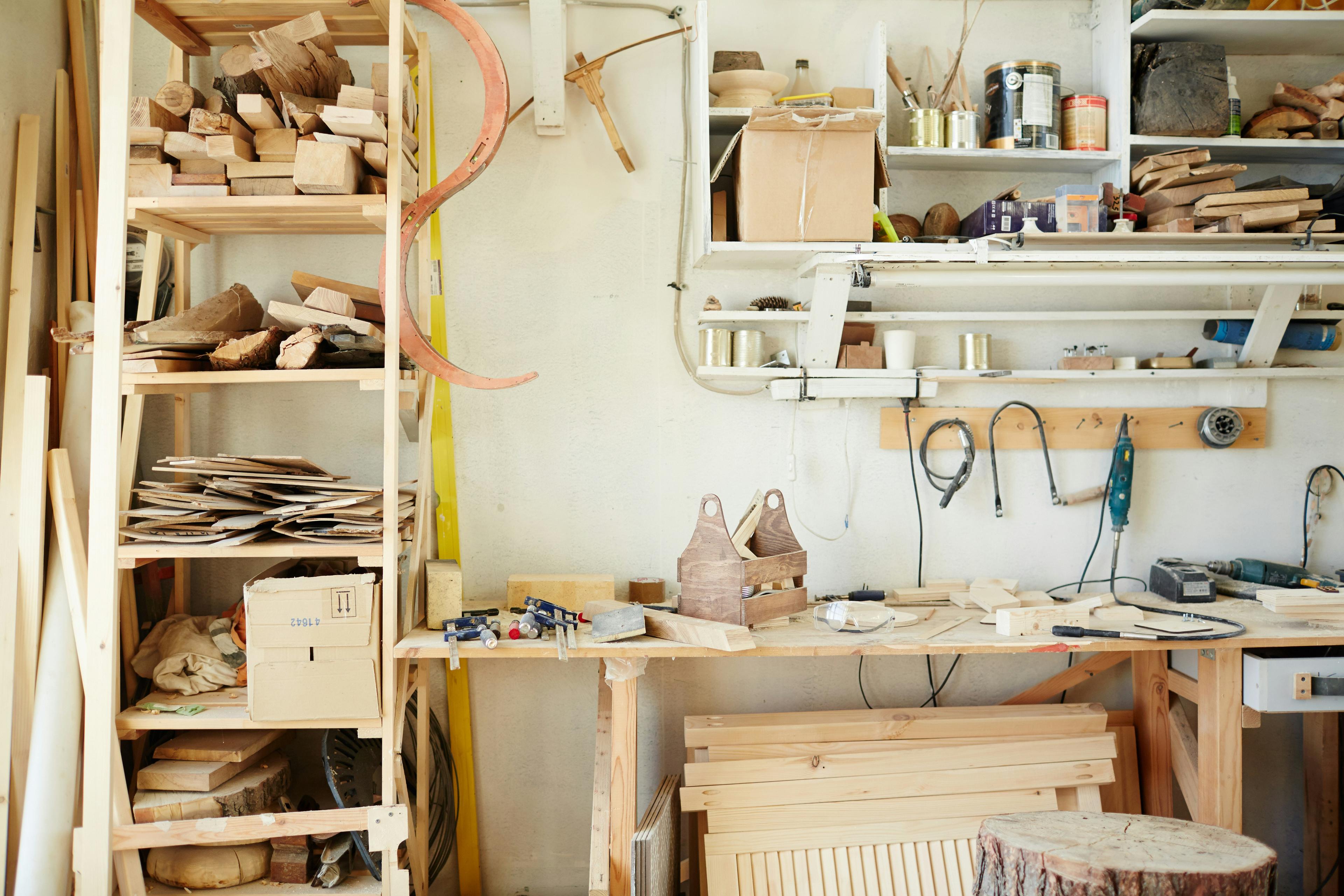
Building for Real Impact
From prototypes to production-ready solutions, students experience the full journey of bringing ideas to life in real community settings.
SCHOOL SUPPORT AT EVERY STEP
Schools receive structured guidance throughout the journey:
Phase 1:
• onboarding for teachers and teams
• empathy + design thinking methods
• challenge briefs co-created with partners
• prototype coaching
• judging and feedback
Phase 2:
• engineering mentorship
• fabrication, materials, and porting support
• technical validation and safety checks
• festival deployment
• documentation and reflection tools
The initiative helps schools build capacity, not dependency.
ORGANISERS & PARTNERS
Jointly organised by:
Singtel, Lionsforge, and Cerebral Palsy Alliance Singapore (CPAS)
Programme partners:
Scaffolds (KWHD) — education design, facilitation, teacher support
Science Centre Singapore — prototyping masterclass
TinkerMind — mobile prototyping labs and 3D printing
TinkerTanker — electronics, kits, and the Stick'em ecosystem
HACKATHON TIMELINE
10 March — Registration deadline
12 March — Kick-off briefing via Zoom, 3 pm
24/25/30 March — CPAS campus tours (East & West, 3–5 pm)
4 May — Semi-finals video submission
15 May — Top 12 finalists announced
25 May – 14 June — Prototyping Masterclass (Science Centre & Lionsforge)
6 August — Finals at CPAS Campus East
6 October — Singtel Carnival: winning designs fabricated and deployed
LIFESTYLE
Tech & Tools
Phase 1: Use anything — Scratch, cardboard, apps.Phase 2: Industry-standard platforms like Arduino for durable builds.
COMMUNITY
Social Proof
Singtel Carnival: Adaptive carnival games designed by youth, professionally fabricated and deployed for children with special needs.135 students designed adaptive games for children with multiple disabilities.
WORK THAT MATTERS
Our partner ecosystem has supported real-world builds across Singapore:
Singtel Carnival for Special Needs Children:
Now in its 12th year. Winning hackathon designs are professionally fabricated and deployed at the annual carnival on 6 October 2026.
Singtel x Lionsforge Inclusive Hackathon:
135 students designed adaptive carnival games enabling children with multiple disabilities to engage and enjoy — a landmark in empathy-driven STEAM education.
National Family Festival Installations:
Large-scale mechanical builds deployed publicly for thousands of families, proving our fabrication capabilities at community scale.
These outcomes illustrate what's possible when students are supported to build beyond the classroom.
JOIN THE INITIATIVE
We invite schools to participate in a programme that helps young people design meaningful change.
Whether you begin with Phase 1 or commit to the full journey, we're here to support you in bringing purposeful innovation into your school community.
EDUCATOR RESOURCES
Singtel x Lionsforge Inclusive Hackathon 2026
Scaffolding materials for educators preparing students to design adaptive carnival games for children with multiple disabilities, in partnership with CPAS.
The core principle: move from broad assumptions to specific constraints. A game designed for "wheelchair users" as a category makes assumptions that won't hold for most people it's meant to serve.
Body Storming: Students must physically simulate constraints before writing problem statements. This replaces assumptions with evidence-based understanding.
Problem Statement Formula:
"[Who] needs [what specific experience] because [what physical constraint makes this hard]"
PLAYER PERSONAS
Design Constraints for Inclusive Games
1. Gross Motor Player
Can strike with an open palm but cannot reliably grip or pinch. Design for broad, forgiving input surfaces.
2. Limited Reach Player
Functional range restricted to a 20–30cm arc, often centered on a lap tray. All game elements must fit within this zone.
3. Sensory Player
Requires strong physical and visual feedback to understand game actions. Every interaction must produce clear, multimodal responses.
KEY DATES & STRATEGY
Hackathon 2026 Timeline
Mar 10 — Registration deadline
Mar 12 — Kickoff briefing via Zoom, 3 pm
Mar 24–25, 30 — CPAS campus tours (East & West)
May 4 — Semi-finals video submission
May 15 — Top 12 finalists announced
May 25 – Jun 14 — Prototyping Masterclass
Aug 6 — Finals at CPAS Campus East
Oct 6 — Singtel Carnival deployment
BRAINSTORMING
Generate ideas without evaluation first, then filter. The framework encourages designing the worst possible game for the persona, then inverting those elements to reveal hidden constraints.
This inversion technique surfaces design requirements that direct brainstorming often misses.
IMPACT BY DESIGN 2026
A two-phase programme helping students design meaningful solutions for real-world problems through prototyping and deployment.
Programme Details
Throughout the year